
Dressing seated: garments that work from a chair
Sitting down to dress removes the balance problem, and for anyone who sits most of the day it changes which garments make sense at all.
Dressing seated
Sitting down to dress takes balance out of the job. Trousers, socks, tights and shoes are the garments most often put on standing on one leg, and that is the position falls guidance worries about. An occupational therapy handout from St Vincent's Hospital Melbourne advises dressing while sitting, at least at first, until you feel confident balancing standing up. A falls-prevention article on the National Council on Aging site (read 19 October 2026) calls putting trousers on seated its single most useful dressing tip.
The method it describes: sit in a steady chair, put both legs into the trousers, pull them up to your thighs while seated, then stand once, briefly, to pull them to the waist. If standing is hard, working the waistband up a little at a time on alternate sides, leaning from one hip to the other, does the same job without standing; the children's occupational therapy guide from Betsi Cadwaladr University Health Board (read 19 October 2026) describes that alternating method.
Trousers with a higher back
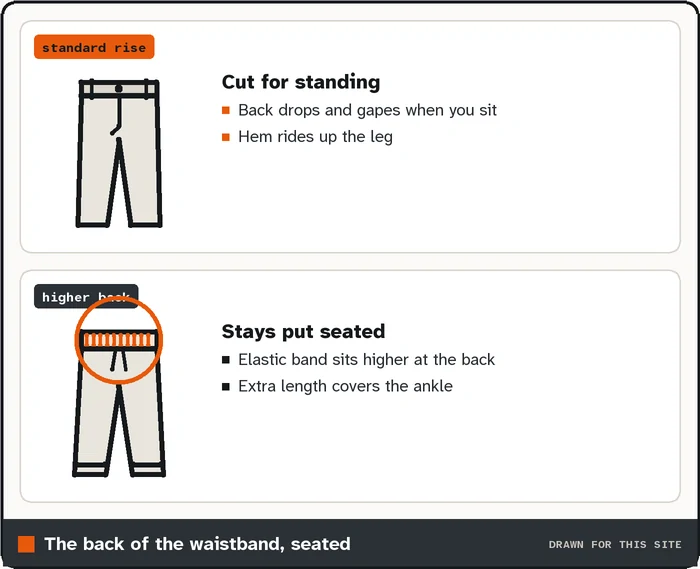
Trousers are cut for a standing body. Sitting changes the shape: the back of the waistband drops and gapes, the front bunches, and the hem rises up the leg. For someone who spends the day seated, including wheelchair users, this matters more than the closure. The Living made easy daywear page notes that clothing with a higher back and longer leg may suit wheelchair users.
Adaptive clothing makers sell trousers cut specifically for sitting, but the catalog shelves have the same features scattered across ordinary garments. Look for a high-rise back, an elastic waistband that sits higher at the back than the front, and enough length that the hem still covers the ankle seated. Back-view photos are where these show; front views hide them.
Pockets you can reach from a chair
Pocket access changes when seated. A back pocket or close front pocket may be hard to reach or uncomfortable with something inside. Compare the placement with the wearer’s usual position and reach; a thigh or loose side pocket is an option to assess, not a universal solution.
Jackets follow the same logic. Hip pockets on a long coat end up under you; chest pockets and pockets on a shorter jacket stay reachable. When you scan a listing, the flat-lay photo shows pocket positions better than a photo of someone standing.
Coats, hems and fabric behind you
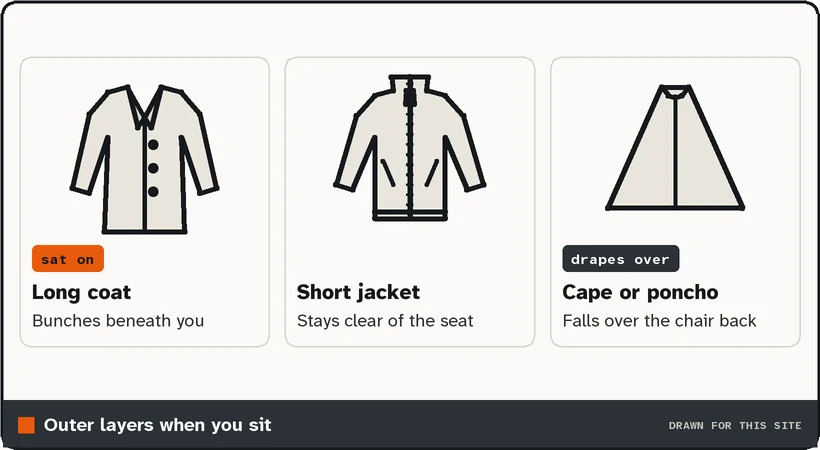
Long coats bunch under you when you sit and have to be pulled out from beneath before you can stand. Shorter jackets and coats that open from the bottom, with a two-way zip, behave better in a chair. A cape or poncho drops over a seated body and over the back of a wheelchair without being sat on.
Length matters at the other end too. The falls leaflet Steady on your feet (read 19 October 2026) from Kent Community Health NHS Foundation Trust advises against clothes that drag on the floor, such as long trousers, skirts or nightdresses, because they can trip you. Extra length that suits sitting can catch your feet once you stand, so it is worth checking the length against how you spend most of the day.
Helping someone else get dressed
Some readers are choosing clothes for a person they help to dress. The University of Worcester carer guide starts with the same questions this site uses: can the person raise their arms up, back and forward, stand from sitting, stand for how long, stand on one leg. It also sets out habits that keep dressing respectful. Lay the clothes out in the order they go on, and keep only the ones you have chosen together in view, so one item at a time is offered. Offer a choice between two garments. Explain what you are about to do before you do it.
Garment choice changes the helper's job as much as the wearer's. Living made easy notes that back openings can make it easier for a carer to dress someone, while front fastenings help people dress themselves; pick according to who does most of the work. For long sleeves, the Worcester guide suggests gathering the sleeve up at the cuff, getting the hand through, then rolling the sleeve along the arm.